Article chapters
Move to any point in this article by clicking on the chapter name or scroll through yourself.
Introduction: The "Loveless Landslide" Hangover
Even when a rose wilts, it's surroundings always remain green

Let’s be honest: the UK political scene since the July 2024 General Election has been an absolute rollercoaster. When Keir Starmer‘s Labour Party snagged a massive supermajority of 411 seats, it looked like total dominance on paper. But peek beneath the hood, and the engine was already sputtering. They pulled off this historic win with just 33.7% of the popular vote; the lowest ever for a governing party. Psephologists quickly dubbed it the “loveless landslide,” pointing out that the victory was driven more by a highly efficient, geographical hatred of the outgoing Conservatives than any genuine enthusiasm for Labour‘s platform.
Fast forward to the spring of 2026, and the honeymoon is well and truly over. The pressures of actually running the country have exposed the fragility of Labour‘s coalition. The Prime Minister‘s approval ratings have tanked to historic lows, and Chancellor Rachel Reeves hit a grim net favourability of -48 by April 2025. The classic two-party system we’ve known since the end of the Second World War has essentially shattered into a chaotic multi-party free-for-all, stretching our First Past the Post (FPTP) electoral system to its absolute limits.
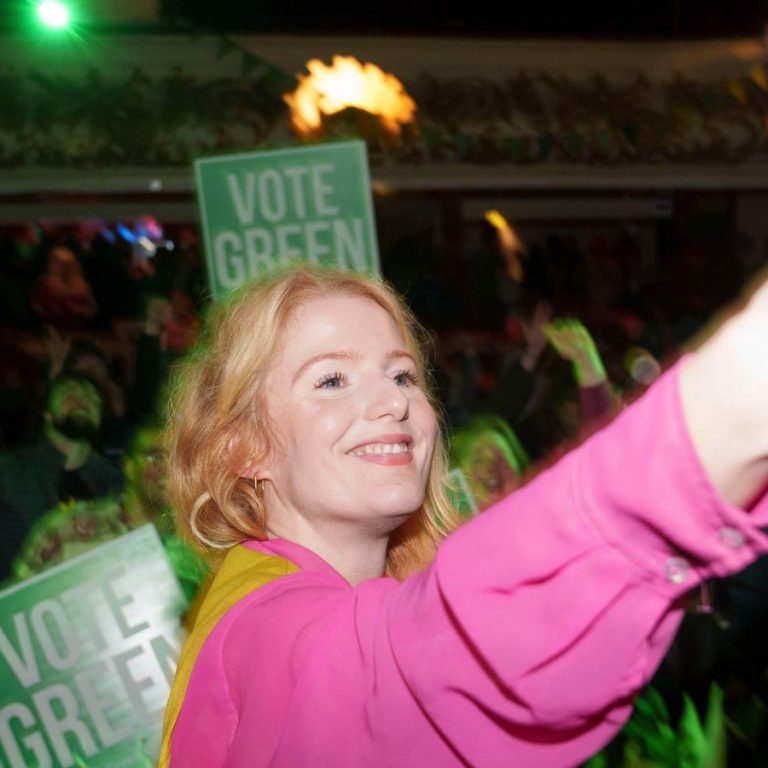
Enter the Green Party. No longer just a fringe group campaigning for better recycling, the Greens have suddenly become the shiny new home for disillusioned left-wingers, socially liberal voters, and furious progressives. After a string of massive by-election shocks; most notably their absolute belter of a win in Gorton and Denton in February 2026. Labour hit the panic button and launched an aggressive, highly negative counter-offensive.
But here’s the massive paradox this report explores: when Labour attacks the Green Party, are they actually just attacking their own former voters? Spoiler alert: the data says yes. By leaning into right-wing rhetoric to bash progressive policies, Labour is actively alienating the exact people they need to secure a long-term future, risking a permanent fracturing of the British Left.
The Great Progressive Migration

Voters ditching Labour for the Greens isn’t just a mid-term grumble; it’s a deep, structural realignment driven by a massive clash of values. Let’s look at exactly who is packing their bags and leaving the governing party.
The Polling Collapse
Between July 2024 and March 2026, the combined vote share for Labour and the Conservatives cratered to a record low of 37.1%. While the big two flounder, the Greens have been riding high, averaging 15.8% in national polls and mixing it up with Reform UK, the Tories, and Labour in a wild four-way race.
| Political Party | July 2024 General Election Vote Share | March 2026 Polling Average (BPC Members) | Percentage Point Shift |
| Labour Party | 33.7% | 18.8% | -14.9 |
| Conservative Party | 23.7% | 18.3% | -5.4 |
| Reform UK | 14.3% | 27.1% | +12.8 |
| Green Party | 6.8% | 15.8% | +9.0 |
| Liberal Democrats | 12.2% | 12.1% | -0.1 |
Table 1: Electoral shifts from the 2024 General Election to March 2026 polling averages. The two-party system is officially sputtering.
Under the leadership of Zack Polanski, the Green Party has completely levelled up. By 13 April 2026, their membership skyrocketed to 226,000, easily overtaking the Conservatives (who sit around 123,000). Meanwhile, Labour has been haemorrhaging supporters. In December 2025, Labour‘s membership dropped below 250,000, and internal trackers showed them losing about one member every ten minutes. Given that steep downward trend over the last four months, there is a very high statistical probability that the Green Party has already overtaken Labour in total fee-paying members.
Who Exactly is a Labour-to-Green Defector?
If you want to know why Labour‘s attacks are misfiring, you have to look at the demographics. Thanks to a massive YouGov dive in June 2025, we know exactly who these defectors are, and they are wildly different from the voters drifting off to Nigel Farage‘s Reform UK.
Voters swapping Labour for Reform are generally older (only 46% are under 50), predominantly working-class (52% C2DE), highly unlikely to have a university degree (25%), and heavy 2016 ‘Leave’ voters (49%).
On the flip side, the Labour-to-Green switcher is the ultimate modern progressive. A massive 70% of them are under 50, making them the youngest defector group by a mile. They are highly educated, and 63% of them are female. Ideologically, they still carry a torch for Jeremy Corbyn (giving him a net positive rating of +56) whilst intensely disliking Keir Starmer.
| Demographic / Ideological Metric | Labour Loyalists | Labour-to-Green Defectors | Labour-to-Reform Defectors |
| Age Under 50 | Minority | 70% | 46% |
| Gender (Female) | 41% | 63% | Data indicates male skew |
| Higher Education (Degree) | 51% | High | 25% |
| Voted ‘Leave’ in 2016 | 13% | Low | 49% |
| Jeremy Corbyn Net Favourability | Highly Negative | +56 | Highly Negative |
| Keir Starmer Net Favourability | +64 | -27 (General Defector Average) | -73 |
Table 2: Who left and who stayed? A breakdown of 2024 Labour voters.
Why Are They Leaving? (Hint: It's the Vibes and the Values)
Political guru Paula Surridge noted that while “valence” (competence and delivery) dictates why a government loses support, actual values determine where those alienated voters end up.
When you ask these defectors why they jumped ship to the Greens, 48% point-blank say Labour became “too right-wing”. Specific policy beefs are everywhere: 25% cited Labour‘s stance on Gaza, 20% pointed to the cost of living, 20% to disability benefit cuts, 19% were furious about trans rights, and 12% were angry about winter fuel payment cuts.
Bottom line: the modern Green base isn’t some alien faction; it’s the amputated left wing of the 2019 Labour coalition. Every time Labour attacks the Greens, they are essentially throwing punches at their own former activists.
Local Drama and High-Profile Defections

This isn’t just happening in the polling booths; it’s happening in town halls across the country. We’ve seen a steady stream of Labour councillors and big-name mayors crossing the floor to put on a Green rosette. In the six months leading up to March 2026 alone, around 50 Labour councillors defected to the Greens.
Take Jamie Driscoll, the former Labour Mayor of the North of Tyne. After a bitter falling out with Labour HQ, he officially joined the Greens in December 2025 and is now planning to unite Greens and independents to seize control of Newcastle’s city council.
Down in London, it’s the same story. Liam Shrivastava quit Labour over Gaza, defected to the Greens, and launched a massive mayoral campaign in Lewisham, accusing the local Labour monopoly of severe complacency. In Hackney, Green candidate Zoë Garbett is making waves by attacking Labour-run NHS trusts for awarding data contracts to the controversial US firm Palantir. Over in Exeter, Councillor Zoë Hughes quit the party explicitly over Labour‘s shifting stance on transgender rights.
Labour Strikes Back: The Attack Playbook
Faced with this massive threat to their left flank, Labour hasn’t offered an olive branch. Instead, they’ve gone full offensive, trying to paint the Greens as an economically dangerous, unserious cult that threatens national stability.
The "We're the Adults in the Room" Attack
Labour‘s main tactic is trying to project economic competence. Ahead of the May 2026 local elections, Keir Starmer went on the offensive, warning that voting Green would risk all the newly won social protections his government had delivered.
He pointed to the new Employment Rights Act 2025 (which brought in “day one” sick pay and flexible working), a 4.8% bump to the state pension, and the scrapping of the two-child benefit cap, arguing that only Labour has the “serious, credible economic strategy” to govern. He lumped the Greens in with Reform UK, calling both of them purveyors of disruptive “populism” that would “take us backwards”.
The Greens fired back immediately, calling Starmer a “caretaker prime minister” who had to be dragged kicking and screaming into passing watered-down workers’ rights after caving to corporate lobbyists. Ouch. And the unions agreed! The Unite union called the new employment laws a “shell of its former self,” whilst Andrea Egan from Unison blasted the administration as a “destructive right-wing Labour Party,” noting that it was “simply unacceptable for a Labour politician to describe striking workers as ‘morally reprehensible'”.
The Culture War Attack: "Heroin, Crack Cocaine, Spice"
But Labour didn’t stop at economics; they took the gloves off during the Gorton and Denton by-election in February 2026.
This was a rock-solid Labour seat up for grabs after Andrew Gwynne resigned following a nasty WhatsApp scandal. Terrified of losing to Green candidate Hannah Spencer or Reform‘s Matthew Goodwin, Labour rolled out aggressive, heavily funded attack ads. They drove ad vans outside polling stations blaring slogans like “Heroin, Crack Cocaine, Spice. Green Party Says Yes,” and “No Green Madness In Our Community”.
The goal was to weaponise the Greens‘ progressive drug and social policies (which favour evidence-based decriminalisation and harm reduction) to make them look like a bunch of dangerous extremists. Starmer doubled down, explicitly warning his MPs about the “extreme policies like legalising all drugs and pulling out of NATO”.
The Backfire of the Century
So, did the tough-guy, “No Green Madness” strategy work? Absolutely not. It went down like a lead balloon.
The Greens scored a seismic, commanding victory in Gorton and Denton with 40.7% of the vote; an unbelievable 27.5-point swing. Reform UK snagged second place, and Labour was humiliated into third with a pitiful 25.4%. It was the first time Labour had lost the seat since 1931.
This disaster exposed the massive flaw in Labour‘s logic: by using right-wing, sensationalist attacks against the Greens, Labour completely validated the exact reason their progressive voters left in the first place. When Keir Starmer calls Green policies “nuts” and “dangerous” , progressive voters don’t run away from the Greens; they nod their heads, say “See? Labour really has gone right-wing,” and vote Green anyway.
Even Labour‘s own MPs couldn’t stomach it. Deputy Leader Lucy Powell reportedly voiced deep concerns behind closed doors, while MP Cat Eccles publicly admitted that the sensationalist drug attacks “did the party no favours whatsoever”. Independent critics, like Penny Wrout, slammed the campaign for stoking fear and fuelling the stigma around addiction.
Gaza, the Biradari Collapse, and the "Sectarian" Name-Calling

We can’t ignore the massive sub-plot here: the total realignment of the British Muslim electorate. While many progressives left over domestic issues, the collapse of Labour‘s Muslim support is entirely tied to the party’s handling of the Gaza conflict.
For decades, Labour relied heavily on the biradari system—a clan-based patronage network where community elders essentially delivered bulk Muslim votes to the party. But Gaza blew that system to pieces. Young Muslim voters, furious at Starmer‘s initial hesitance on international law, rebelled against both Labour and the community elders endorsing them.
The Green Party swooped into this vacuum beautifully. They campaigned hard on Palestinian solidarity, with members voting in late 2025 to call for the IDF to be officially proscribed as a terrorist organisation. During the Gorton and Denton by-election, Green candidate Hannah Spencer (a white, non-Muslim plumber) campaigned in a keffiyeh, released Urdu-language videos, and even observed a fast for Ramadan. It worked brilliantly, backed by grassroots groups like Stand Up To Racism.
Labour‘s reaction? They started bitterly complaining about “sectarianism” and the dangers of identity-based “family voting”. Commentators across the spectrum quickly pointed out the staggering hypocrisy here. As The Spectator brutally noted, Labour actively pandered to these exact same ethnic and religious voting blocs for decades when it won them elections. Complaining about “leopard face-eating” now that the Greens are simply playing Labour‘s old game better has earned the party zero sympathy.
The Global Trend: "Stop the Greens!"
If it’s any comfort to Labour, they aren’t the only ones dealing with this headache. Across the globe, centre-left parties in Westminster-style democracies are fighting the exact same turf war with environmentalists.
Down under in Australia, the centre-left Labor government has been throwing similar punches, framing the Australian Greens as an obstacle to economic progress. In New South Wales, there have been massive fights over native timber logging and the Great Koala National Park, with moderates accusing the Greens of destroying working-class jobs in the name of environmental purity. Over in New Zealand, Labour faced intense backlash over wetland protections, with voters explicitly threatening to jump ship to the Greens.
It proves a universal rule: when a centre-left party gets into power and prioritises corporate stability over ideology, they inevitably alienate their base and end up in a nasty shouting match with their local Green party.
The Future: A Fractured Left and Tactical Chaos
Labour‘s strategy carries massive, long-term risks for British politics. By aggressively isolating their progressive wing, Labour is hurtling towards the kind of left-wing fragmentation we usually see in Europe (think France and Greece), where traditional powerhouse parties eventually crumble into unstable coalitions.
Adding fuel to the fire is the very real threat of a new party led by Jeremy Corbyn and Zarah Sultana. Polling in early 2026 showed that 20% of the public is open to this idea, rising to a massive 33% among the 16-34 demographic. Even scarier for Labour HQ: 74% of these prospective voters and 60% of current Green voters want a formal electoral pact between the Greens and this new Corbyn faction. A united ticket like that could completely carve up the progressive vote in urban and university towns, spelling disaster for Labour marginals.
Furthermore, the old rules of tactical voting are dead. In 2024, everyone voted Labour just to kick the Tories out. But Gorton and Denton proved that progressive voters are no longer scared into voting Labour by the threat of Reform UK. Labour’s ads literally warned that a Green vote would let Reform through the “back door,” and voters simply didn’t care. They backed the Greens anyway, and the Greens won.
Conclusion: Stop Hitting Yourself, Labour
Labour is currently trapped in a brutal, two-front war. On the right, they are losing older, working-class voters to Reform UK over immigration and cultural stagnation. To fight this, Labour talks tough on borders and acts highly fiscally conservative. But every time they pivot right to fend off Nigel Farage, they push thousands of young, progressive voters straight into the arms of the Green Party on their left.
The mountain of evidence is undeniable: when Labour attacks the Green Party, it is attacking its own political diaspora. The demographic profile of a 2026 Green voter is functionally identical to a 2019 Labour activist.
Labelling the policies of their own former supporters as “madness” or “dangerous” isn’t a winning strategy; it’s self-sabotage. As the UK sinks deeper into a highly volatile multi-party era, Labour urgently needs to realise that the Greens aren’t an invading alien force; they are Labour‘s own abandoned progressive conscience. If they keep treating them like an enemy to be destroyed rather than a faction to be negotiated with, Labour will just guarantee its own eventual defeat. Ya know, like Dodo level defeat… Extinction. Yes, we’re at this point in the conversation but I’ll leave it here.
Share it, so others know...
- Share on Bluesky (Opens in new window) Bluesky
- Share on Mastodon (Opens in new window) Mastodon
- Email a link to a friend (Opens in new window) Email
- Print (Opens in new window) Print
- More
- Share on X (Opens in new window) X
- Share on WhatsApp (Opens in new window) WhatsApp
- Share on Reddit (Opens in new window) Reddit
- Share on Pinterest (Opens in new window) Pinterest
- Share on Threads (Opens in new window) Threads
- Share on Tumblr (Opens in new window) Tumblr
- Share on Facebook (Opens in new window) Facebook
- Share on Telegram (Opens in new window) Telegram
- Share on Nextdoor (Opens in new window) Nextdoor
- Share on LinkedIn (Opens in new window) LinkedIn
- Share on X (Opens in new window) X